Saturday, May 27, 2006


In the lecture for 26/05 we learnt about Communications in Information Communication Technology. Communication occurs in networks such as:
  • Chain network.
  • Circle network.
  • Wheel network and
  • All-channel network.

There are four main types of communication which can be categorised into a table. There is:

  1. Place dependent / Synchronous
  2. Place dependent / Asynchronous
  3. Place independent / Synchronous
  4. Place independent / Asynchronous

Some examples of communication include mobile telephones, laptops and e-mail. People use chatrooms, discussion boards and instant message clients to communicate with one another on computers.
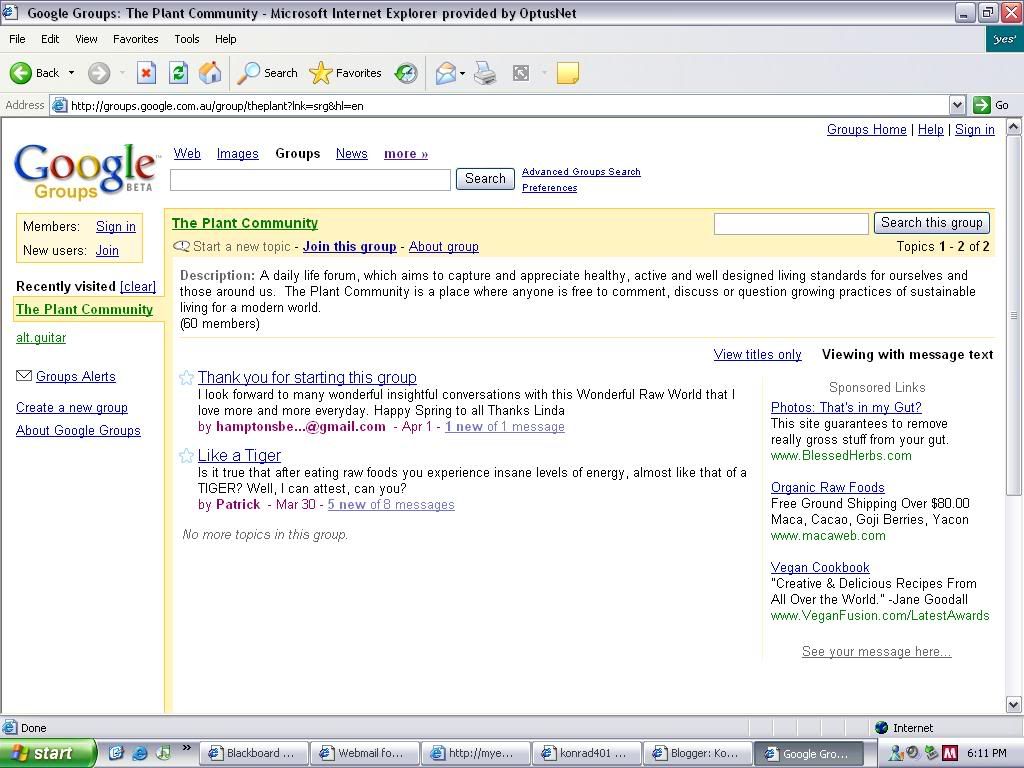
In Google Groups I entered the search term 'plant growing' and found about 5 main groups on this matter. I found that many people who had queries about growing certain plants came to these groups and asked questions which were answered by other users who knew something on the matter. It is just a discussion forum where people meet to discuss a similar topic.

Friday, May 19, 2006


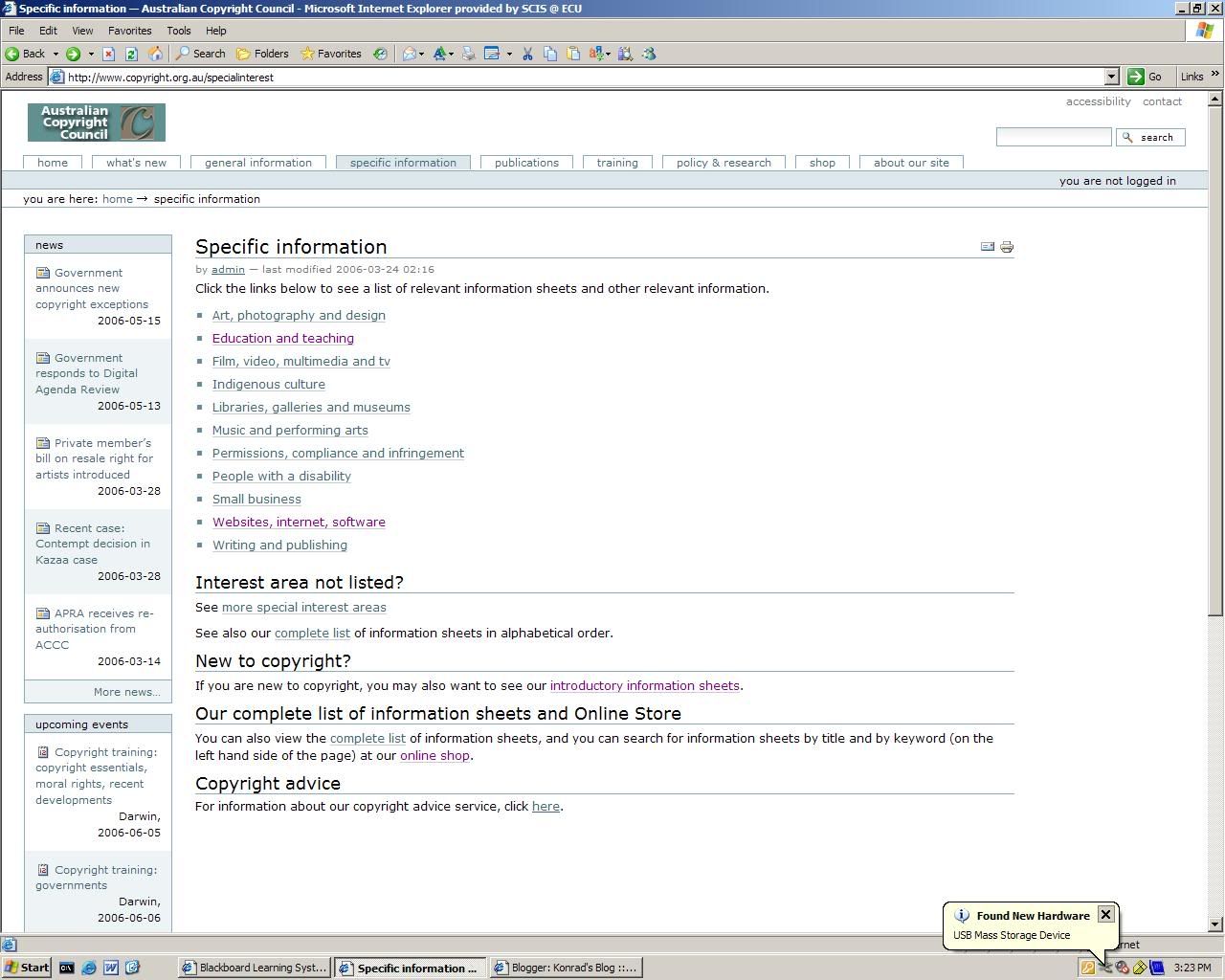
The Australian Copyright Council provides certain information sheets which would be useful to me in an undergraduate degree.

These include:
Broadband content
Computer software
Internet: copying and downloading
Websites

John Sankas was sentenced to almost four years in jail for violating criminal copyrigfhrt laws. He was known as the co-leader of the piracy group known as DrinkOrDie. The company's role was to acquire new software and distribute it illegally over the internet.

Virus prevention:
DON'T open e-mails or attachments from senders you don't know.
Scan all files when downloading.
Be aware of viruses that may potentially attack your computer.

Friday, May 12, 2006

These are 10 useful functions that may be used on the ECU library website.

1. Document retrieval.
2. Search engine.
3. Information for external or overseas students.
4. Provide feedback on the ECU library.
5. People to contact.
6. An online referencing guide.
7. The availability of EndNote V9.
8. News referring to ECU library.
9. Find key websites.
10. Login to the MetaQuest catalogue.


Anyone suffering from the disease or interested in taking a particular drug whether legal or illegal. It may also be used by students doing an educational assessment on medical information. Bad doctors wanting to find extra information on a condition or drug they are unsure about.

Friday, May 05, 2006


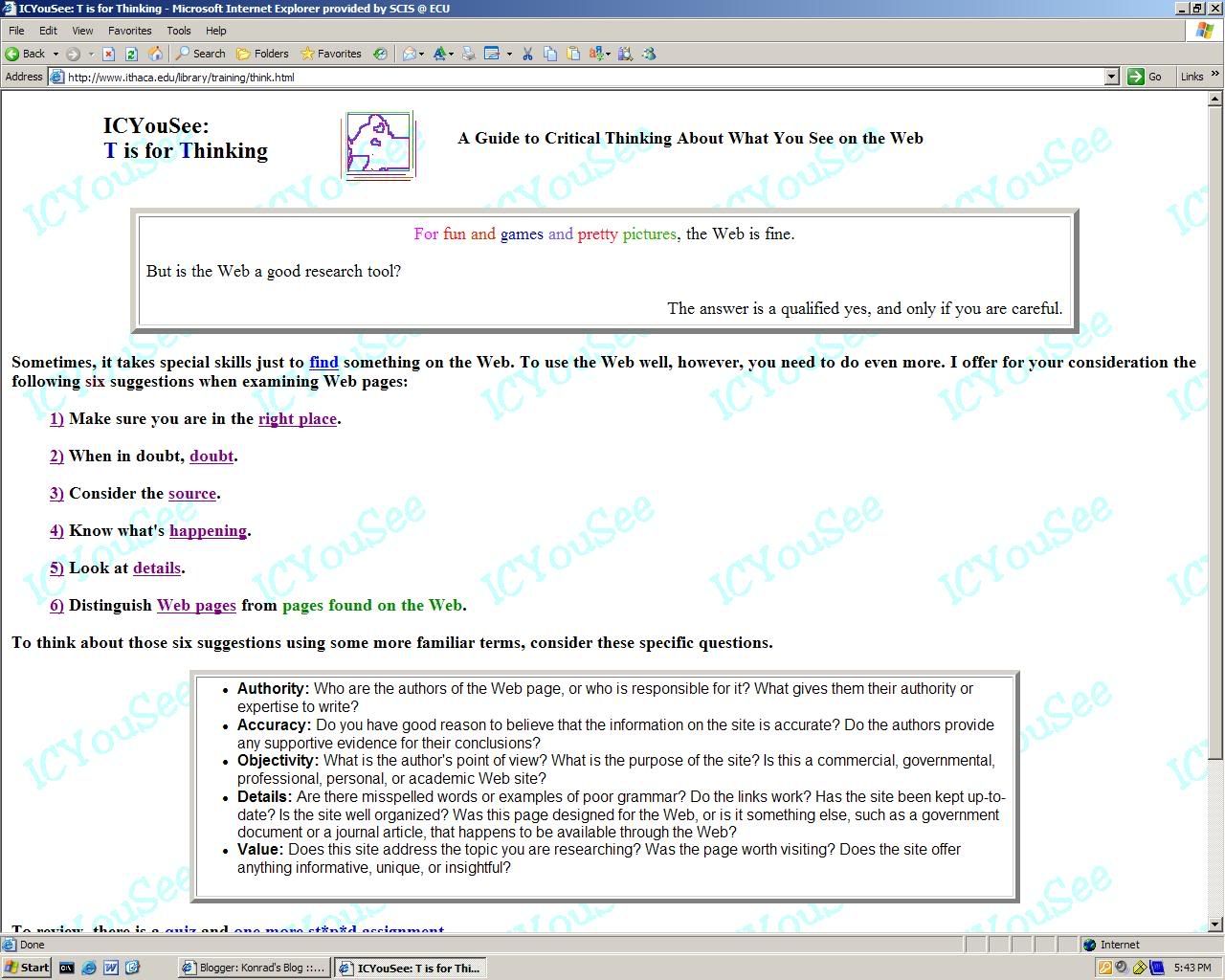
There are many different strategies in evaluating the information that can be found on the web. These are a few of them taken from http://www.ithaca.edu/library/training/think.html.

  1. Ensure that you are in the right place, and be searching in the right spots for your answers.
  2. When you are unsure of something then check the accuracy of the page.
  3. Consider the source in question. Find out the authority of the webpage and find out using your own intuition whether it is a good or bad source.
  4. Know what is happening on the webpage, find out whether the page is there to inform, persuade or sell you something.
  5. Look at the details of the webpage, such as good grammar and spelling. Look at the language and check whether it is casual or professional.
  6. Web pages are different from pages found on the web. Web pages are all the websites one would visit whereas pages on the web may refer to a specific page.

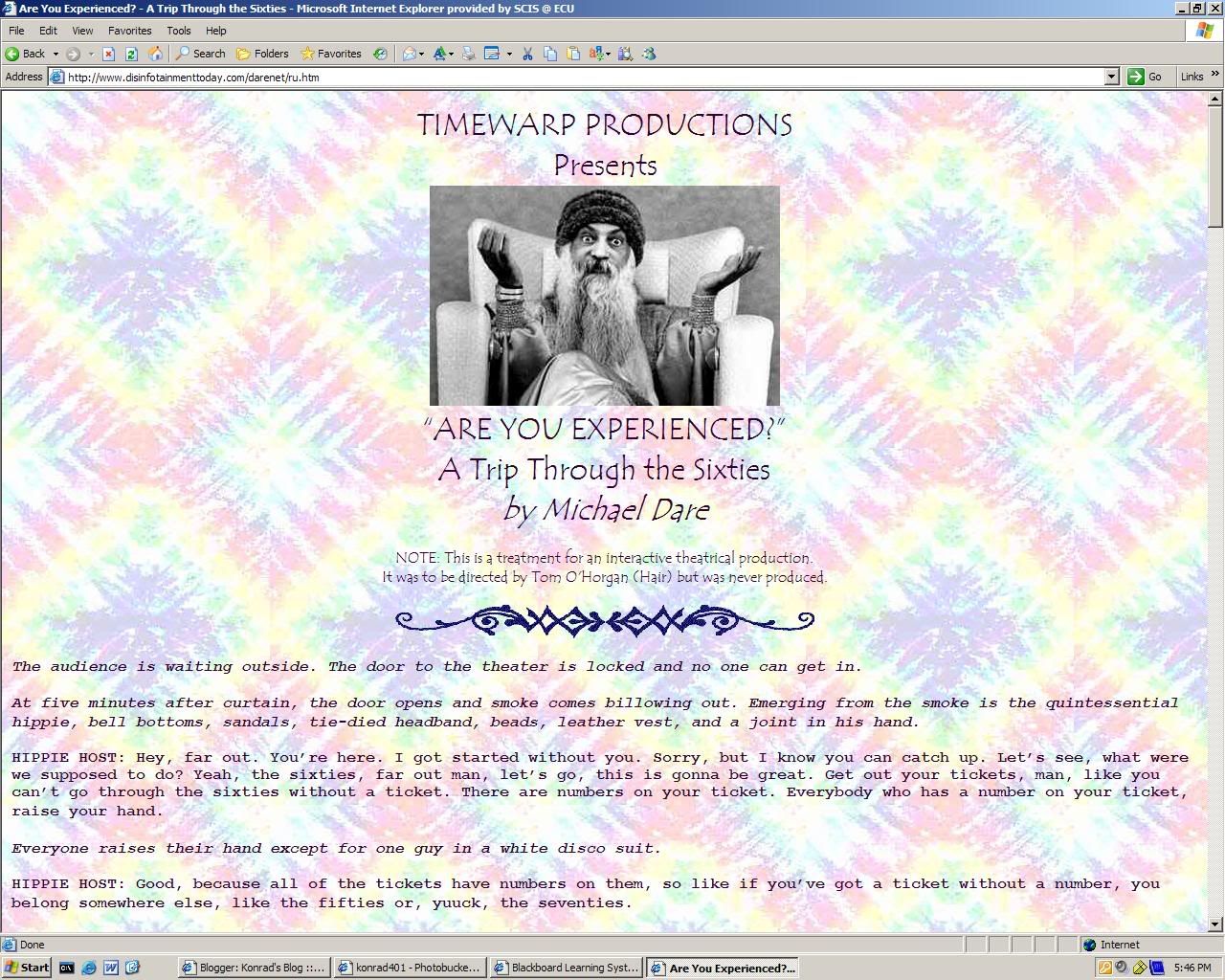
http://www.disinfotainmenttoday.com/darenet/ru.htm

This website is quite accurate as it provides facts that occurred each year throughout the decade of the 60s. An author is evident in the writing of this webpage. The purpose of this page is to inform the user of the 60s and some of the events that occurred during that time. This page has a very basic design, with a psychedelic background and lots of text. This site shows a conversation showing the language of the 60s which doesn't have a point, but the minor facts have some interesting information.

http://www.lib.virginia.edu/small/exhibits/sixties/index.html

This site provides alot of accurate from many events that shaped the 1960s. The authority of this page comes from the University of Virginia. The purpose of this site is to inform the user of the 1960s and the events that shaped that decade. This page's design is very basic and it is difficult to navigate around it. It provides some information, but overall it would not be useful to someone wanting to find out about the 60s.