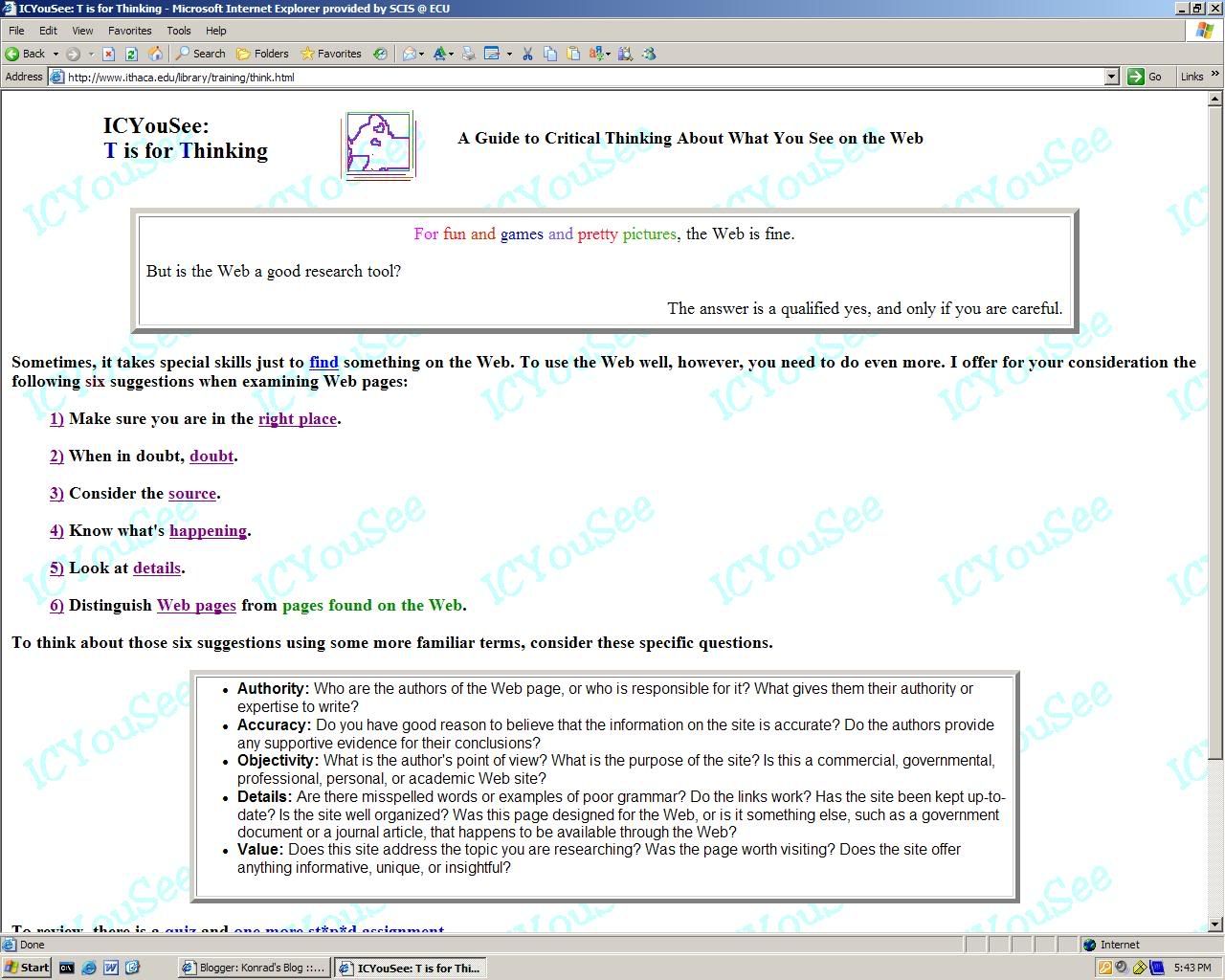
There are many different strategies in evaluating the information that can be found on the web. These are a few of them taken from http://www.ithaca.edu/library/training/think.html.
- Ensure that you are in the right place, and be searching in the right spots for your answers.
- When you are unsure of something then check the accuracy of the page.
- Consider the source in question. Find out the authority of the webpage and find out using your own intuition whether it is a good or bad source.
- Know what is happening on the webpage, find out whether the page is there to inform, persuade or sell you something.
- Look at the details of the webpage, such as good grammar and spelling. Look at the language and check whether it is casual or professional.
- Web pages are different from pages found on the web. Web pages are all the websites one would visit whereas pages on the web may refer to a specific page.
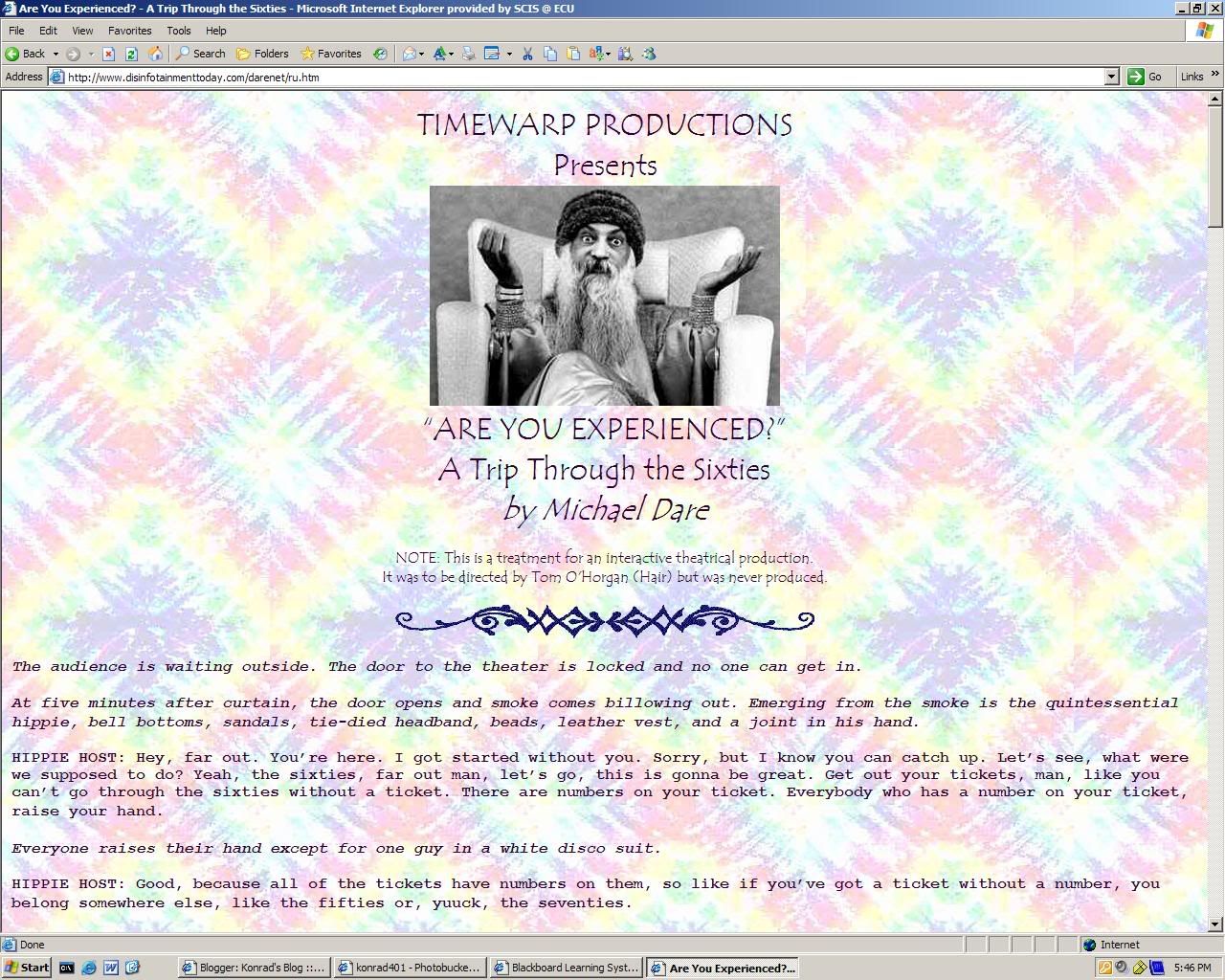
http://www.disinfotainmenttoday.com/darenet/ru.htm
This website is quite accurate as it provides facts that occurred each year throughout the decade of the 60s. An author is evident in the writing of this webpage. The purpose of this page is to inform the user of the 60s and some of the events that occurred during that time. This page has a very basic design, with a psychedelic background and lots of text. This site shows a conversation showing the language of the 60s which doesn't have a point, but the minor facts have some interesting information.
http://www.lib.virginia.edu/small/exhibits/sixties/index.html
This site provides alot of accurate from many events that shaped the 1960s. The authority of this page comes from the University of Virginia. The purpose of this site is to inform the user of the 1960s and the events that shaped that decade. This page's design is very basic and it is difficult to navigate around it. It provides some information, but overall it would not be useful to someone wanting to find out about the 60s.

No comments:
Post a Comment